

Kyoto Travel Guide: Temples, Seasonal Foliage & Culture (2026)
 By Admin
Travel Japan / Cities (Tokyo, Osaka, Kyoto, Sendai)
Kyoto was Japan's imperial capital for over a thousand years. When the emperor moved to Tokyo in 1869, Kyoto kept everything else — the temples, the shrines, the tea houses, the geisha districts, the craft traditions, and the particular slowness of a city that has never felt the need to prove anything to anyone.
Related inside
It is the most visited city in Japan for good reason. It is also the most misvisited — tourists spend their mornings at the same five temples on every travel blog, squeeze through Arashiyama at noon with tour groups, and leave having seen Kyoto's surface rather than its depth. This guide goes deeper. It tells you which temples, which season, which time of day, and what the crowds are hiding just around the corner.
Understanding Kyoto Before You Arrive
Kyoto is long and narrow, running north to south through a valley ringed by mountains on three sides. The city organizes itself in distinct districts — the historic center around Gion and Higashiyama along the eastern foothills, the bamboo forest and temple district of Arashiyama to the west, the imperial palace grounds in the center, and the northern Kinkakuji and Kurama mountain districts above everything.
You cannot walk between these areas — the city is too spread out. Buses are the primary visitor transport (¥230 flat fare anywhere within the city boundary on the municipal network, get a one-day bus pass for ¥700 if making more than three trips). The subway covers north-south and east-west lines but misses most temple districts. Cycling is excellent — rental shops near Kyoto Station charge ¥1,000–¥1,500 per day and the river paths and backstreets are flat and beautiful.
The one scheduling rule that matters: Kyoto's famous sites are overwhelmed by crowds by 10am. Every single recommendation in this guide works better before 9am or after 4pm. Build your days around this. It is the single biggest difference between a magical Kyoto visit and a frustrating one.
The Temples — Kyoto's Living Architecture
Kyoto has 1,600 Buddhist temples and 400 Shinto shrines. Most are not on any tourist map and are more beautiful for it. These are the ones that genuinely deserve your time — including a few the tour groups never find.

Kinkakuji — The Golden Pavilion
The most visited temple in Japan and possibly the most genuinely justified famous sight in the country. The top two floors of the three-story Zen pavilion are covered entirely in gold leaf. It sits at the edge of a mirror pond designed to double the gold reflection. On a clear morning with still water, the image is almost surreal — as though someone designed the most extravagant possible building specifically to be photographed.
Go at 9am when the gates open and walk briskly to the main viewing platform before the tour groups arrive. By 10am the path is shoulder-to-shoulder. By 9:15am, if you moved fast, you will have had fifteen minutes of near-solitude with one of the world's great sights.
Admission: ¥500 adults | Hours: 9am–5pm daily

Ryoan-ji — The Rock Garden
Five minutes' walk from Kinkakuji, Ryoan-ji's famous karesansui garden is one of the world's great works of abstract design — fifteen rocks arranged in five groups on a rectangle of raked white gravel, positioned so that no matter where you stand on the wooden viewing platform, one rock is always hidden from view. No one knows what it means. That is rather the point.
The rest of the temple grounds — a large pond garden, ancient trees, a quiet garden café — are considerably less crowded than the rock garden and considerably more peaceful. Allow an hour.
Admission: ¥600 adults | Hours: 8am–5pm (winter 8:30am–4:30pm)

Fushimi Inari — Go Past the Crowds
Every photograph of Fushimi Inari shows the same dense orange tunnel at the base of the mountain. What every photograph fails to show is what happens when you keep walking.
The hike to the summit of Mt. Inari takes about two hours return. The vast majority of visitors turn back at the first viewing point, twenty minutes up. Keep going. The upper mountain trails narrow, the gates become irregular and moss-covered, the stone fox messengers (Inari's divine animals) acquire an otherworldly presence in the forest light, and the crowds simply disappear. The Yotsutsuji intersection halfway up has a bench, a small teahouse selling sweet potato snacks, and a view over all of Kyoto that most of the city's visitors never see.
Arrive at dawn if possible — Fushimi Inari has no closing time, and the gates lit by early morning light through forest canopy is an experience of extraordinary beauty. The torii tunnel at dawn with nobody else present is Kyoto at its most arresting.
Admission: Free | Hours: 24 hours
Ginkakuji & The Philosopher's Path — The Walk Everyone Should Do
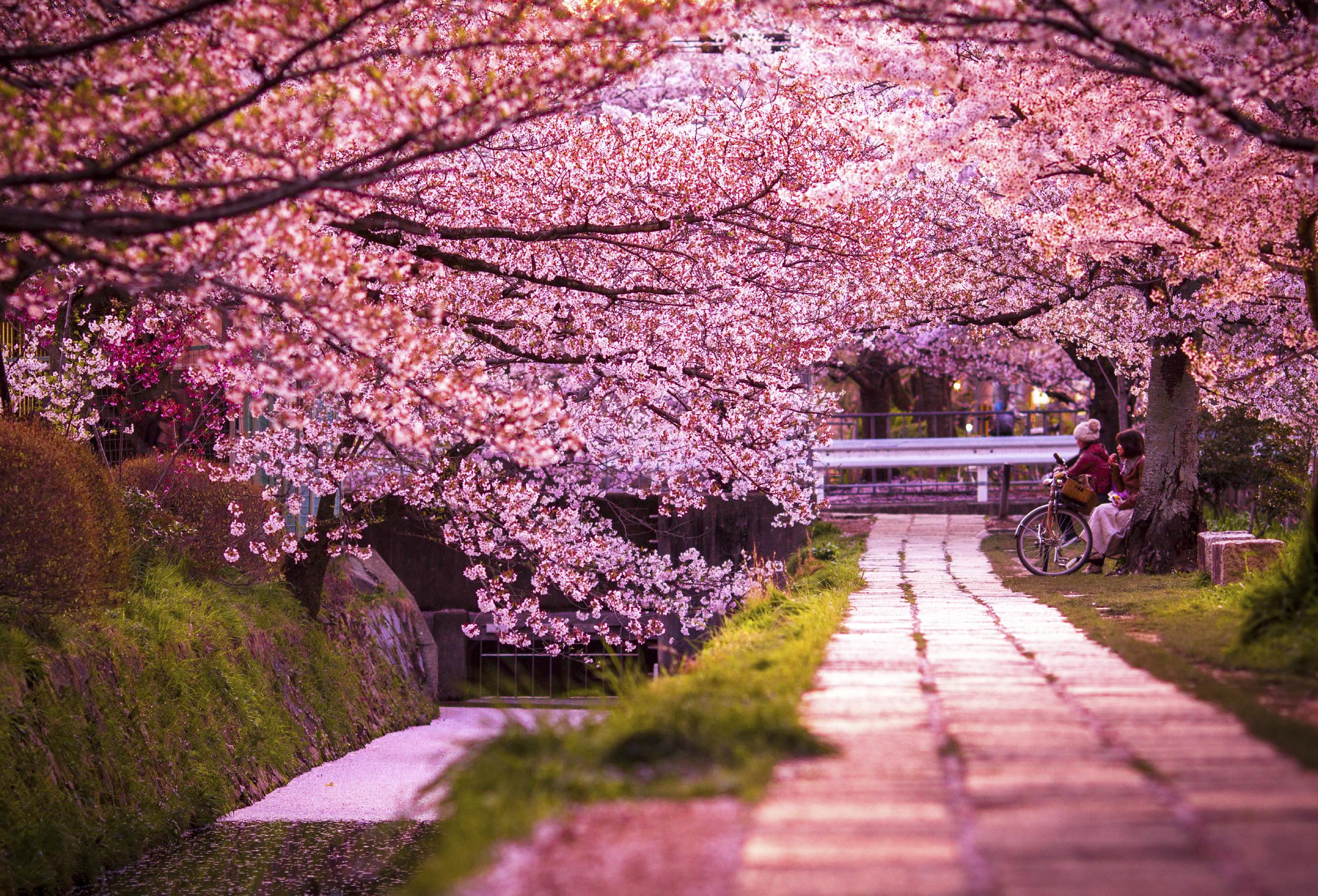
Ginkakuji (the Silver Pavilion — never actually silver-coated, and more beautiful for the restraint that implies) anchors the northern end of Kyoto's most famous walking route. The Philosopher's Path (Tetsugaku-no-Michi) follows a narrow canal lined with cherry trees for two kilometers south through the Higashiyama foothills toward Nanzen-ji.
The walk takes forty minutes at a stroll and passes small shrines, independent cafés, a tofu restaurant that has operated since the 1800s, and the point where the cherry blossom is so thick during peak bloom that petals fall into the canal and float downstream. In autumn, the same canal turns amber and gold.
At the southern end, Nanzen-ji's massive sanmon gate (climb it for ¥600 for an elevated view over the temple rooftops) and the extraordinary brick aqueduct running through its grounds — built in 1890 to carry water from Lake Biwa, a piece of Meiji-era engineering sitting with complete confidence inside a 13th-century Zen temple — is one of Kyoto's great unexpected sights.
Kyoto by Season — What to See When
Kyoto is beautiful in every season. The right temples and the right expectations make the difference.
🌸 Spring — Cherry Blossom Season (Late March to Mid-April)
Kyoto's cherry blossom is the most famous in Japan. The Philosopher's Path canal, Maruyama Park's weeping cherry tree (lit up at night and extraordinary), the grounds of Kiyomizudera overlooking the hillside of bloom, and the approach to Daigo-ji Temple in the southern hills are the finest blossom spots in the city.
The reality: Peak bloom in Kyoto coincides with Japan's spring holiday period and draws massive domestic and international crowds. Trains are packed. Accommodation books out three to four months ahead. The famous spots are beautiful but not quiet. Go early — 6am at Maruyama Park during bloom is manageable and moving. 10am is a queue.
When to visit: Bloom timing varies by year. Tokyo typically blooms first (late March), Kyoto follows 3–5 days later. Check the Japan Meteorological Corporation's annual cherry blossom forecast (published each February) for the year's specific prediction.

🍂 Autumn — Foliage Season (Mid-November to Early December)
Many travelers who have done both say Kyoto's autumn foliage surpasses even the cherry blossom. The maple trees (momiji) turn extraordinary shades of crimson, orange, and gold throughout the Higashiyama hills and temple gardens — colors so saturated they look artificially enhanced in photographs until you see them in person.
The essential autumn temples:
Tofuku-ji: The greatest single autumn foliage view in Kyoto — possibly in Japan. The Tsutenkyo Bridge crosses a valley of 2,000 maple trees that turn simultaneously in mid-November, creating a river of red visible from both above (from the bridge, where crowds are significant) and below (from the garden paths, which are quieter and give a completely different perspective). Arrive at 8am when gates open.
Eikan-do: Evening illumination (special event, mid-November to early December) transforms this temple's gardens into a dreamlike landscape of lit maples reflected in the central pond. One of Kyoto's finest night experiences. Book the illumination entry ticket in advance.
Arashiyama: The Sagano area's forest turns amber and gold in late November. The mountain reflection in the Oi River at Togetsukyo Bridge with colored forest on the hills behind it is one of Kyoto's iconic autumn images.
Timing: Kyoto's peak foliage typically falls in the third week of November. Book accommodation in October for November stays — rooms at every price point go quickly, and prices rise 30–50% during peak color.
❄️ Winter — The Secret Season (December to February)
Winter is Kyoto's most underrated season. Crowds drop dramatically after December's tourist rush clears. Temple gardens are empty and frost-covered. Occasionally, snow dusts the vermillion Fushimi Inari gates and the golden roof of Kinkakuji — photographs that show a Kyoto most visitors never see.
The special experiences: Kinkakuji after snowfall is one of the rarest and most beautiful sights in Japan — gold pavilion, snow-covered garden, empty viewing platform. It requires luck with weather, but January and February in Kyoto occasionally deliver 3–5 centimeter snowfalls. Check the forecast during your visit and be ready to move early.
Daitoku-ji — a vast temple complex in the northern city made up of 24 sub-temples, most closed to the public but several (Koto-in, Daisen-in) open year-round — is extraordinary in winter. The moss and stone gardens under frost, with no crowds, are some of the most meditative spaces in Kyoto.
Gion — Kyoto's Geisha District
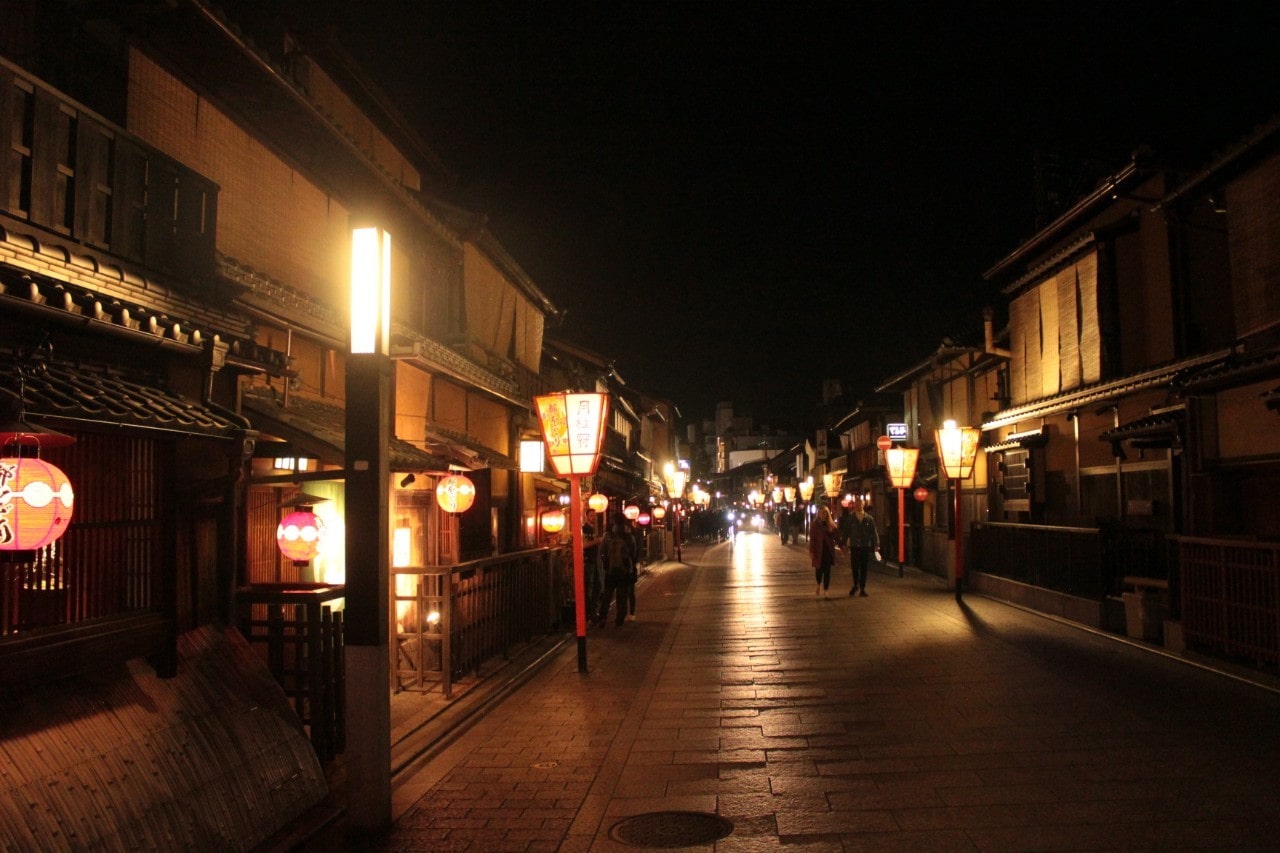
Gion is the most atmospheric neighborhood in Kyoto — possibly in all of Japan. The machiya townhouses lining Hanamikoji Street have barely changed in 200 years. Behind their wooden facades, the ochaya (teahouses) that host geisha entertainment operate exactly as they have since the Edo period, admission by introduction only, schedules known only to regular patrons.
What you can do in Gion as a visitor: walk Hanamikoji Street at dusk when the lanterns light and the chance of encountering a maiko (apprentice geisha) or geiko (Kyoto's term for a fully qualified geisha) heading to an evening engagement is highest. Walk the Shimbashi canal streets parallel to Hanamikoji — stone bridges, weeping willows, and a silence that is remarkable for a major tourist destination.
The important rule: Do not chase, photograph without consent, or obstruct geisha on their way to engagements. Gion's okiya (geisha houses) have fought for legal protections against tourist harassment and Kyoto city has issued formal guidelines prohibiting photography in certain private alleys. Respect the neighborhood's working culture and it will reveal itself to you.
Arashiyama — Bamboo, River & Temple

Arashiyama sits at the western edge of Kyoto where the mountains meet the city, the Oi River curving through the valley with forested hills on both sides. It is simultaneously Kyoto's most visited district and — at the right time of day — its most peaceful.
The Bamboo Grove is thirty seconds from Tenryu-ji's north gate and takes four minutes to walk through. It is also, at midday, among the most crowded corridors in Japan. At 7am it belongs to you — the morning light through the canopy is better anyway, the sound of the bamboo moving in early wind is its own experience, and the photographs without a single person in frame are actually achievable.
Beyond the bamboo: Tenryu-ji's garden (Kyoto's finest garden by most measures — a landscape design that has been maintained for 700 years, ¥500 garden entry) backs directly onto the bamboo grove. Jojakko-ji temple, a ten-minute walk up the hillside, has one of Kyoto's finest pagodas surrounded by moss, maples, and stairs worn smooth by centuries of feet. It receives perhaps one twentieth of Tenryu-ji's visitors. Okochi Sanso villa — the former home of a silent film era samurai actor — has tea, a panoramic view of the mountains and city, and an almost complete absence of crowds, ¥1,000 entry including matcha and sweets.
Kyoto's Cultural Experiences Worth Doing
Matcha tea ceremony: Dozens of operators in the Higashiyama and Gion districts offer 45-minute tea ceremony introductions (¥2,000–¥4,000). En tea ceremony and Camellia Tea Experience both receive consistently good reviews from non-Japanese visitors for genuine explanation rather than performative tourism.
Kodo — incense ceremony: Less known than the tea ceremony but equally traditional, kodo involves identifying and appreciating different blends of burning incense — a practice that dates to the Heian court. Yamadamatsu in Kyoto offers introductory kodo experiences by reservation.
Nishiki Market: Kyoto's "Kitchen" — a narrow 400-meter covered shopping street with 100+ food stalls selling pickles, tofu, fresh yuba (tofu skin), dashi, matcha products, and every regional specialty of the Kansai region. Buy, taste, and eat as you walk. Best experienced in the morning when produce is freshest and stall owners have time to talk.

Practical Kyoto
Getting there: From Tokyo, the Shinkansen Hikari or Nozomi takes 2h 15m–2h 40m (¥13,320–¥14,250 unreserved from Tokyo Station to Kyoto Station). From Osaka, the JR Shinkaisoku takes 15 minutes (¥560) or the Hankyu limited express from Umeda to Kawaramachi takes 45 minutes (¥400).
Getting around: Buy a one-day bus pass (¥700) from the bus terminal outside Kyoto Station. Buses cover every major temple district. Supplement with a bicycle from a rental shop near the station (¥1,000–¥1,500/day) for the flat riverside paths and downtown streets.
Where to stay: The Gion and Higashiyama areas put you within walking distance of Kyoto's most atmospheric streets and temple districts — book 3–4 months ahead for peak seasons. For a budget option, the Kyoto Station area has the widest selection and best transport access. See our complete Japan hotel guide for specific hotel picks at every budget.
What to eat: Kaiseki is Kyoto's culinary tradition — the multi-course refined cuisine that Tokyo's finest restaurants ultimately trace back to. A proper kaiseki lunch (¥3,000–¥8,000) is more accessible than dinner. Tofu cuisine (yudofu) is Kyoto's other specialty — simple, austere, unexpectedly moving when made with the quality of Kyoto water and locally produced tofu. Okutan near Nanzen-ji has served yudofu in the same garden setting for 350 years.
Booking reality: Kyoto books out faster than any city in Japan. For cherry blossom (late March–mid April) and autumn foliage (mid-November to early December) travel, accommodation and popular restaurant reservations need to be made 2–4 months in advance. Do not arrive hoping to figure it out on the day.

Kyoto rewards patience and early mornings more than any other city in Japan. Its greatest moments — the bamboo grove in 7am fog, a maiko passing under a lantern in Gion at dusk, the Tofuku-ji valley blazing in November, the sound of a wooden temple bell reverberating through cold winter air — require timing, not money or luck. Get up before the tours. Stay past the crowds. The Kyoto that exists in those margins is the one people spend the rest of their lives trying to describe.
Planning your Kyoto trip? Read our complete Japan hotel guide for the best accommodation in Gion, Arashiyama, and Kyoto Station — at every budget, with direct booking links.
Read next
Osaka Travel Guide: Nightlife, Street Food & Easy Transit (2026)
Continue with a related guide to keep your reading momentum.
Comments
No approved comments yet.